
The path of an artist
Aleksandra Mijalković
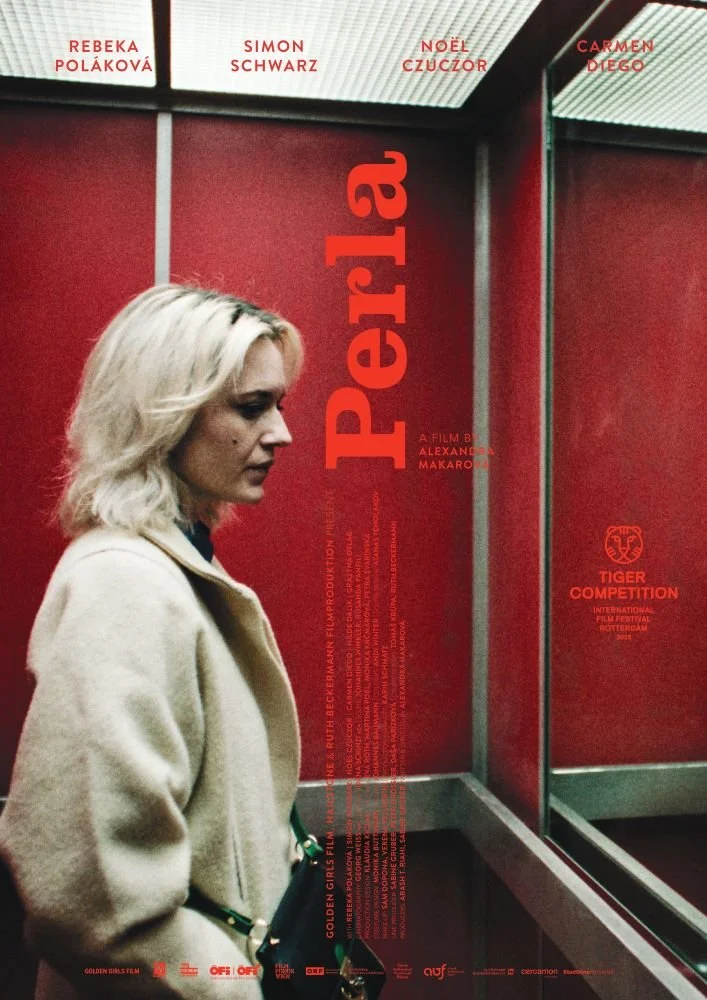
The film Perla by the Slovak-Austrian director and screenwriter Alexandra Makarova follows the emotional, character and moral growth of the painter who fled Czechoslovakia for Vienna in 1968, carrying with her the burden of the trauma she experienced at the time.
Imagine a village in Czechoslovakia, when Eastern Bloc tanks entered in 1968 to put down the civil rebellion, the Prague Spring. Imagine a pregnant eighteen-year-old Perla, who dreams of becoming a painter, and her boyfriend Andrej, in the woods, by a stream, trying to escape to Austria in the night, but they are caught by the border police. You do not see the explicit scene of violence, yet you understand what happened, and what mark it will leave on them. Thus begins Perla, somewhat based on the biography of the author's mother.
Now imagine Perla in Vienna, 12 years later, with her daughter Julia. She does all kinds of jobs to survive and looks for buyers for her paintings, until she finds a patron, a lover, and then a husband in the wealthy, elderly art collector Josef. Love or a pragmatic decision, it is up to the viewer to draw their own conclusions. Her life in the Austrian capital is represented in the film in bright and vibrant colors, with the smiling faces of people, unlike the gray, gloomy Czechoslovakia and its frightened, silent inhabitants with lifeless eyes. The two countries are painted in black and white contrasts, but this adherence to the stereotype – the beautiful West on the one hand, as opposed to the dark backwater of Eastern European repression on the other – is actually justified and purposeful. First of all, because it explains why Perla wanted to flee from the CSSR, and what a risk her return posed in 1980, when the central plot of the film begins. That's when a call comes from Andrej, who, after many years, is out of prison and wants to meet his daughter. Perla's hard-earned decision to travel to her former homeland triggers an avalanche of emotions, from the memory of youthful love, guilt due to the fact that she managed to leave, and he did not, moral debt to him and Julia, nostalgia for her birthplace… The traumatic experience they both experienced is repeated in brief flashes of Perla's memories and in her paintings. The unspoken emotions and thoughts of her inner world, conveyed through evocative music, leave a strong impression—especially in sequences where only the dull, rhythmic sound of percussion is heard, like a heartbeat or a distant rumble of tanks. And Andrej's actions, when he meets Perla again, can be seen as desire, revenge or unfulfilled dreams, culminating in his betrayal. There is not so much romance as anger in the scenes of their intimacy. Their daughter Julija, allegedly the main reason for their reunion, is sidelined and neglected, which is felt throughout the film, and most strongly when her mother is dealing with her own demons of the past.
In the last part of the film, the iron curtain is gone, the Berlin Wall is demolished, the Eastern Bloc is torn down, Perla is free, and she knocks on the door of Josef's apartment in Vienna. Her face shows a change: uncertainty, but also hope, and a willingness to accept responsibility for everything that awaits her when that door opens. The author reversed the more commonly used directorial procedure to depict some historical event or zeitgeist through the story of the main protagonist, using, on the contrary, the political circumstances in which Perla found herself in order to explore her emotional, character and even moral growth, through intimate traumas, attitude towards close persons and her own identity. In this, she succeeds, albeit at the cost of making the protagonist not always likeable to viewers, who may judge some of her actions—such as taking her daughter to Czechoslovakia —as immature and selfish.